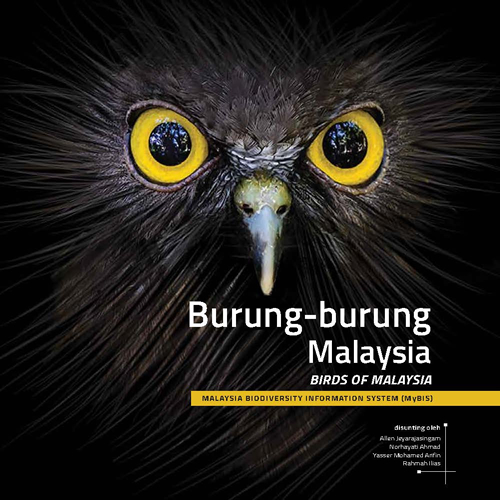
Burung-burung Malaysia : Malaysia Biodiversity Information System (MyBIS)
- Month/Year2016
- Pages165
-
PublisherPenerbit UKM, Bangi
- CountryMalaysia
- LanguageMalay
- ISBN9789674124434
-
AuthorsAllen Jeyarajasingam, Norhayati Ahmad, Yasser Mohamed Arifin & Rahmah Ilias
Abstract
This book provides a snapshot of selected bird species in Malaysia. As part of conservation efforts, this book was produced in collaboration by the Ministry of Natural Resources and Environment (NRE), Department of Wildlife and National Parks (PERHILITAN) Peninsular Malaysia, Malaysia Biodiversity Information System (MyBIS) Team from the Forest Research Institute of Malaysia (FRIM), Universiti Kebangsaan Malaysia (UKM) and enthusiastic bird naturalists, that consists of individuals and groups, from the Birds, Nature and Us (BNU), BirdGroup Taman Negara (BGTN) and Malaysian Nature Society (MNS). This book contains the most recent data and information on selected species of Malaysia’s birds in a clearly explained manner. The best photos were chosen to grace the pages complete with QR codes that correspond to the detailed information of each species in the MyBIS, which can be accessed to the public free online.
Citation

Butterflies of Peninsular Malaysia: with a checklist of Scientific, English and Malay names

- Month/Year2023
-
PublisherMinistry of Natural Resources, Environment and Climate Change
- CountryMalaysia
- LanguageEnglish
-
AuthorsRosli Omar, Azidah Abdul Aziz & Sofwan Badrud'din
Abstract
This book showcases more than 230 butterfly species available in Peninsular Malaysia, all photographed in the wild. It also includes three checklists of all the available species in Peninsular Malaysia and Singapore with scientific names following Corbet and Pendlebury, 5th Edition (2020). The English names follow the same if the names were available, otherwise, they were obtained from other sources. The third checklist introduces the Malay names of these species, the first as never before has a complete list of Malay names prescribed to butterfly species here.
Adapted mainly from English, we have included some innovations. For example, the Painted Lady and Red Indian Admiral, which we cannot tell are related from their names, are both from the genus Vanessa. In Malay, we use the concept ‘group name’ to show their relatedness. For Vanessa, it is ‘Laksamana’. Thus, Painted Lady, Vanessa cardui, is Laksamana Bersolek, and Red Indian Admiral, Vanessa indica indica, is Laksamana India Merah. The group name is also applied across related genera.
Citation
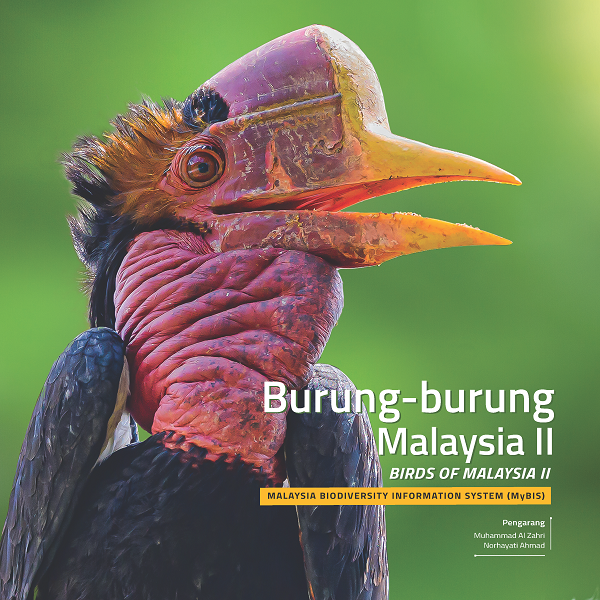
Burung-burung Malaysia : Malaysia Biodiversity Information System (MyBIS)
- Volume2
- Month/Year2022
- Pages100
-
PublisherKementerian Tenaga & Sumber Asli
- CountryMalaysia
- LanguageMalay
- ISBN9789670250458
-
AuthorsMuhammad Al Zahri & Norhayati Ahmad
Citation
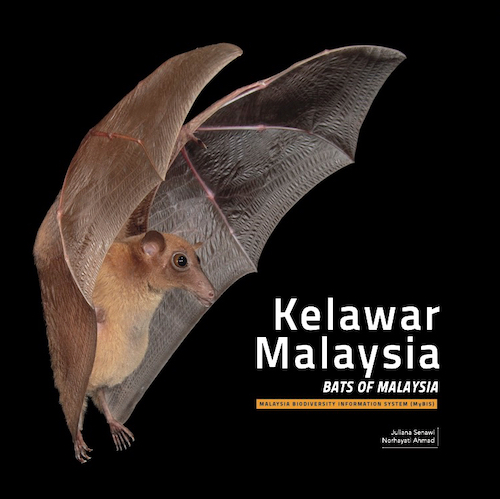
Kelawar Malaysia / Bats of Malaysia
- Month/Year2021
- Pages80
-
PublisherKementerian Tenaga & Sumber Asli
- CountryMalaysia
- LanguageMalay
- ISBN9789670250373
-
EditorsJuliana Senawi & Norhayati Ahmad
Abstract
Ada sebanyak 143 spesies kelawar yang direkodkan di Malaysia. Ia mewakili lebih kurang 10% fauna kelawar dunia dan 40% spesies mamalia di Malaysia. Buku ini mengandungi maklumat terkini tentang spesies kelawar terpilih di Malaysia. Gambar terbaik telah dipilih untuk menyerlahkan halaman buku. Pembaca boleh mendapatkan maklumat lanjut daripada pangkalan data MyBIS yang boleh diakses secara percuma melalui kod QR.
There are 143 bats species recorded from Malaysia. This number represents about 10% of the world's bats fauna and 40% of Malaysian mammal species. This book contains updated information on selected species of bats in Malaysia. The best pictures have been selected to highlight the pages of the book. Readers can get detailed information for each species from the MyBIS database that can be accessed online for free via QR code.
Citation
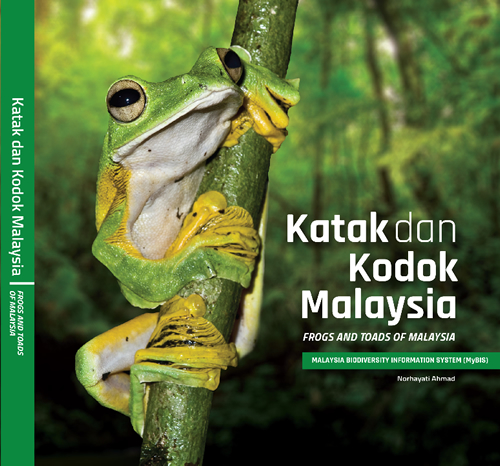
Frogs and Toads of Malaysia: Malaysia Biodiversity Information System (MyBIS)
- Month/YearDecember 2017
- Pages101
-
PublisherPenerbit UKM, Bangi
- CountryMalaysia
- LanguageEnglish
- ISBN9789674125110
-
AuthorsNorhayati Ahmad
Abstract
This book contains the most recent data and information on selected species of Malaysia’s frogs and toads in a clearly explained manner. The best photos were chosen to grace the pages complete with QR codes that correspond to the detailed information of each species in the MyBIS web-based database, which can be accessed by the public free online.
We hope that readers will find the material both accessible and inspiring for others to join the effort to produce more books in the series, and also to educate ourselves about the wonders that nature have to offer for our spiritual and physical well-being.
Citation
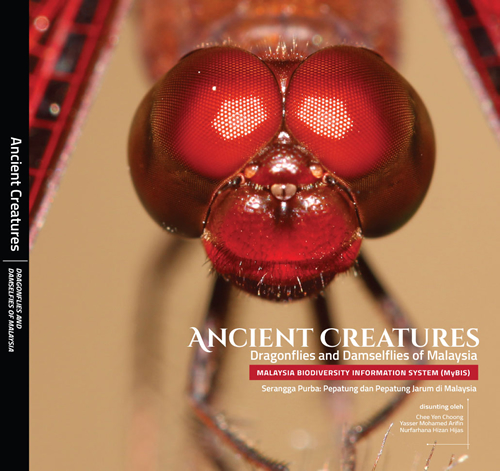
Ancient Creatures: Dragonflies and Damselflies of Malaysia
- Month/Year2018
- Pages115
-
PublisherMinistry of Water, Land and Natural Resources, Putrajaya
- CountryMalaysia
- LanguageEnglish
- ISBN97896702502989
-
AuthorsChoong Chee Yen, Yasser Mohamed Arifin & Nurfarhana Hizan Hijas
Abstract
This book presents the latest data and information on the richness of dragonflies and damselflies species in Malaysia. Enrich with carefully selected pictures, this book also includes QR codes linking to additional information on the Malaysia Biodiversity Information System (MyBIS) website. This website purpose is to become an online repository centre that includes information on Malaysian biological diversity.
Nearly 400 species of Odonata contained in 17 families can be found in Malaysia. At least 180 species are dragonflies and 210 species are damselflies. This MyBIS book series 'Ancient Creatures: Dragonflies and Damselflies of Malaysia' highlights a total of 69 species of dragonflies and 73 species of damselflies which can be found throughout Malaysia.
Citation
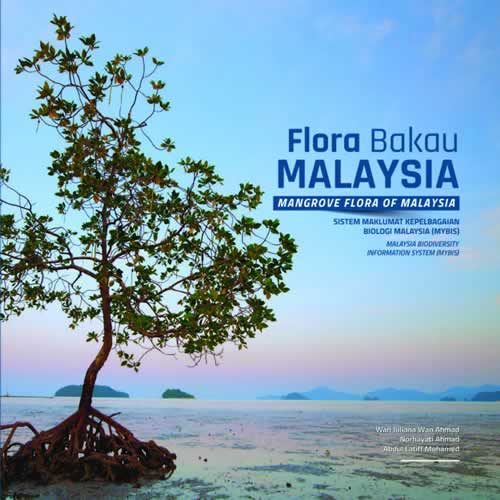
Mangrove Flora of Malaysia: Malaysia Biodiversity Information System (MyBIS)
- Month/YearDecember 2018
- Pages100
-
PublisherPenerbit Universiti Kebangsaan Malaysia
- LanguageEnglish
- ISBN9789674127275
-
AuthorsW.A. Wan Juliana, Norhayati Ahmad & Abdul Latiff Mohamed
Abstract
The publication of "Mangrove Flora of Malaysia" is one of the efforts done by the Ministry to document the mangrove plant species found in Malaysia. This book contains the latest data and information on the richness of mangrove flora species in Malaysia and presented in a clear and interesting way. The best pictures have been selected to highlight the pages of the book, complete with QR code which linked to the Malaysia Biodiversity Information System (MyBIS) website. The objective of this website is to become a one-stop repository centre for biological diversity in Malaysia.
Citation
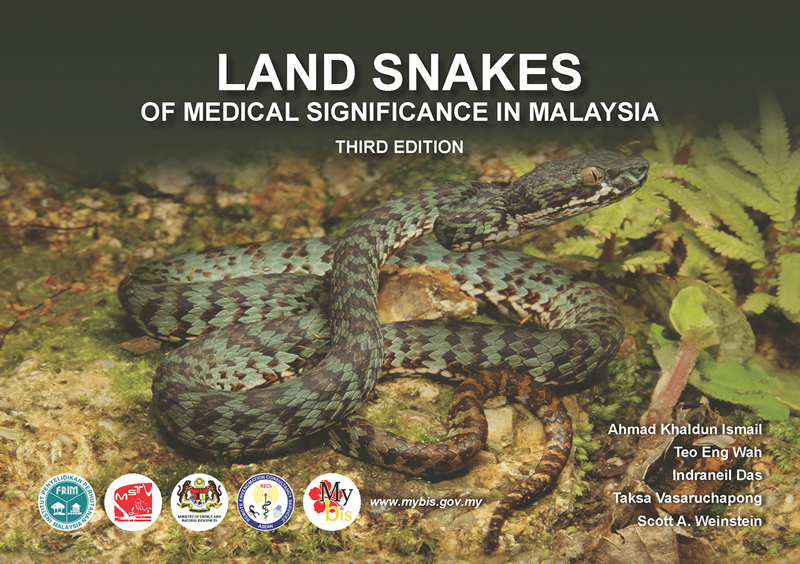
Land Snakes of Medical Significance in Malaysia. 3rd Edition
- Month/Year2022
- Pages87
-
PublisherForest Research Institute Malaysia (FRIM)
- CountryMalaysia
- LanguageEnglish
- ISBN9789672810186
-
AuthorsAhmad Khaldun Ismail, Teo Eng Wah, Indraneil Das, Taksa Vasaruchapong & Scott A. Weinstein
Abstract
While a majority of snakes occurring in Malaysia are not equipped with venom and constitute little threat to humans, a number of species can cause envenoming that may lead to permanent disability or death. The range of snakes of medical significance in Malaysia encompasses the families Natricidae, Elapidae, Pythonidae and Viperidae. The third edition of Land Snakes of Medical Significance in Malaysia covers 36 land snakes, each account with easy to use infographics and multiple images when available, to show the different life history stages and sexes. It is intended as a guide for healthcare providers, and the general public permitting them to identify and manage potential snake-related injuries. The purpose of this book is also to increase awareness of the beauty and diversity of a critical component of Malaysia’s biodiversity.
Citation
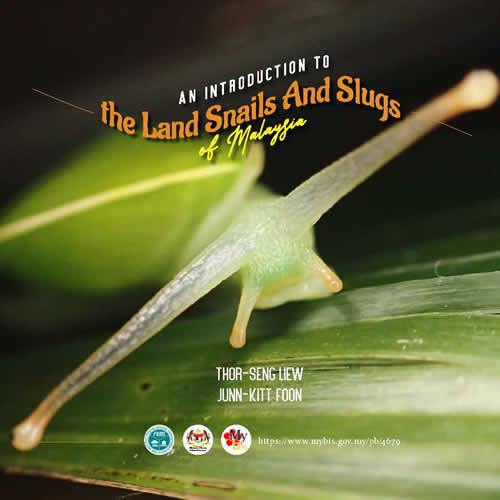
An Introduction to the Land Snails and Slugs of Malaysia
- Month/YearFebruary 2022
- Pages90
-
PublisherForest Research Institute Malaysia (FRIM)
- CountryMalaysia
- LanguageEnglish
- ISBN9789672810230
-
AuthorsLiew Thor Seng & Foon Junn Kitt
Abstract
Land snails and slugs are the second most abundant invertebrates on land after insects. There are about 800 - 1,000 known species of land snails and slugs in Malaysia. Except for a few introduced species in the gardens around our neighbourhood, land snails and slugs have generally been overlooked by most people. There are a few reasons why most of us are not familiar with land snails and slugs despite their immense diversity in Malaysia. Firstly, almost all native land snails and slugs are found only in the vicinity of or within rainforests where habitats are less accessible to people. Second, most land snail and slug species are tiny (less than 5 mm) and their population densities in their natural habitats are very low, except on limestone karsts where they can be common. Thirdly, most information on Malaysian land snails are published as scientific papers with technical terminologies and format, which are not easily understood for non-specialist audiences such as the general public.
Therefore, we prepared this book as an accessible resource to encourage people’s understanding and appreciation of the diversity of land snails and slugs in Malaysia. To that end, we used simple language and minimised technical terminologies. The first part of the book provides a general introduction to land snails and slugs with regards to their classification, species diversity, morphology, sampling methods, ecology and conservation. The second part of the book presents a selection of common and noteworthy land snail and slug genera as well as their representative species.
